 TOIT DES
 Roof Maintenance: The Complete Guide
Discover best practices for keeping your roof in excellent condition all year round and extending its lifespan by 10 to 20 years.
Why Regular Maintenance Is Essential
Your roof is the first barrier protecting your home against the elements. In Auvergne, weather conditions — rain, snow, frost, wind — put stress on the covering. Temperature swings between summer and winter, which can reach 50°C in Puy‑de‑Dôme, cause expansion and contraction cycles that gradually weaken tiles, flashings, and zinc work. Regular maintenance catches these weaknesses before they become costly problems.
A well-maintained roof lasts 40 to 60 years depending on the materials. Without maintenance, this lifespan can be halved, or worse in damp, shady areas where moss proliferates. Investing in preventive maintenance — a few hundred euros every 8 to 10 years — represents a fraction of the cost of a complete roof replacement (€80 to €150/m²). For 300-500€ of maintenance every 8-10 years, you avoid a roof replacement costing 8,000-15,000€.
Beyond weather protection, a well-maintained roof contributes to your home's energy efficiency. Porous or poorly jointed tiles allow cold air in during winter and heat in during summer. You can reduce your heating bills by 10 to 20%.
The Ideal Maintenance Calendar
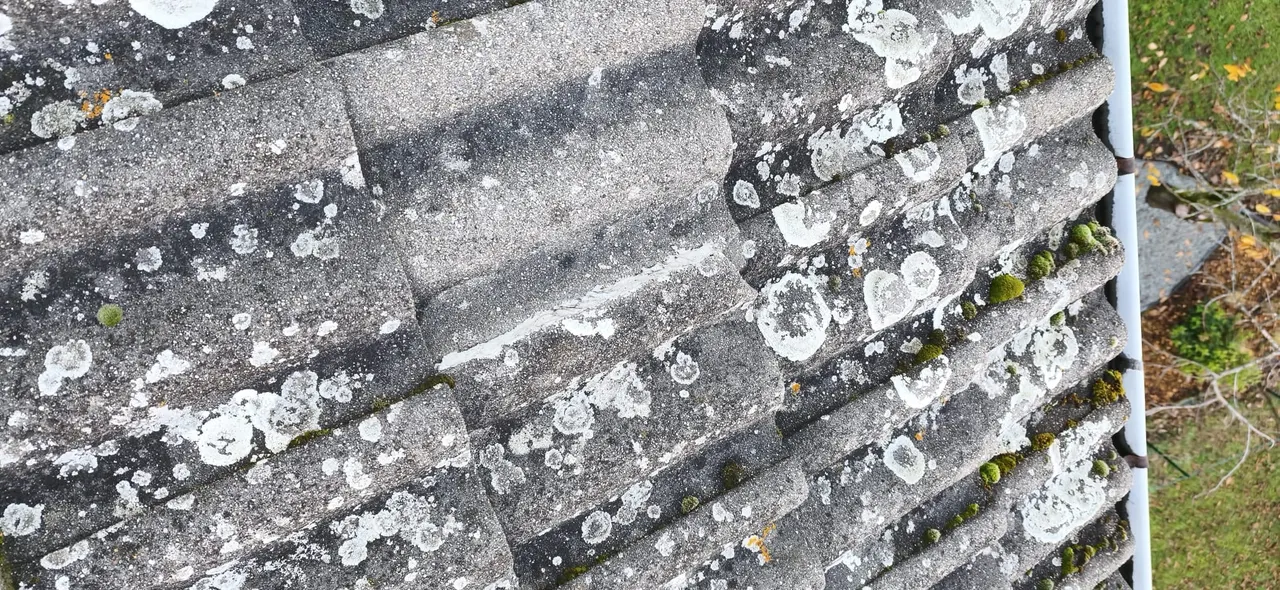
In spring (March‑April): this is the ideal time for the annual inspection. After a harsh Auvergne winter, check for tiles displaced or cracked by frost, clean gutters of accumulated debris, and inspect flashings at chimney bases. If moss is visible, this is the best time to schedule a professional cleaning — mild temperatures allow effective application of anti-moss products.
In summer (June‑August): a period of passive monitoring. Take advantage of long days for a visual inspection from the ground using binoculars. Spot rust marks on zinc work, tiles that have changed colour (a sign of porosity), gutters that drip at joints. If a waterproofing treatment is planned, summer offers the best drying conditions.
In autumn (October‑November): clean gutters and downpipes of dead leaves before the first rains. A blocked gutter causes overflows that damage the façade, foundations, and can even cause water to rise under tiles by capillary action. Also check the condition of ridge mortar and ventilated closers — they must be in good condition to face winter.
After every storm: systematic visual inspection from the ground. Look for missing tiles, shifted hip ridges, torn-off gutters, and branches that have fallen on the roof. If in doubt, never climb onto the roof yourself — call a qualified roofer with the proper safety equipment. Storm damage is covered by your home insurance (declaration within 5 working days).
The 5 Essential Checkpoints
1. Tiles and slates: spot broken, cracked, or displaced elements. A single missing tile is enough to create a water path that, over months, will damage insulation, framework, and ceilings. Also check tile colour — tiles turning darker or greenish are porous and becoming dirty. This signals that cleaning and waterproofing are needed.
2. Gutters and downpipes: check they are not blocked by leaves, moss, or bird nests. Standing water that overflows corrodes zinc work, stains the façade, and can damage foundations through run-off. Also check the gradient: a sagging gutter no longer drains correctly. Rusted fixing brackets must be replaced before they fail.
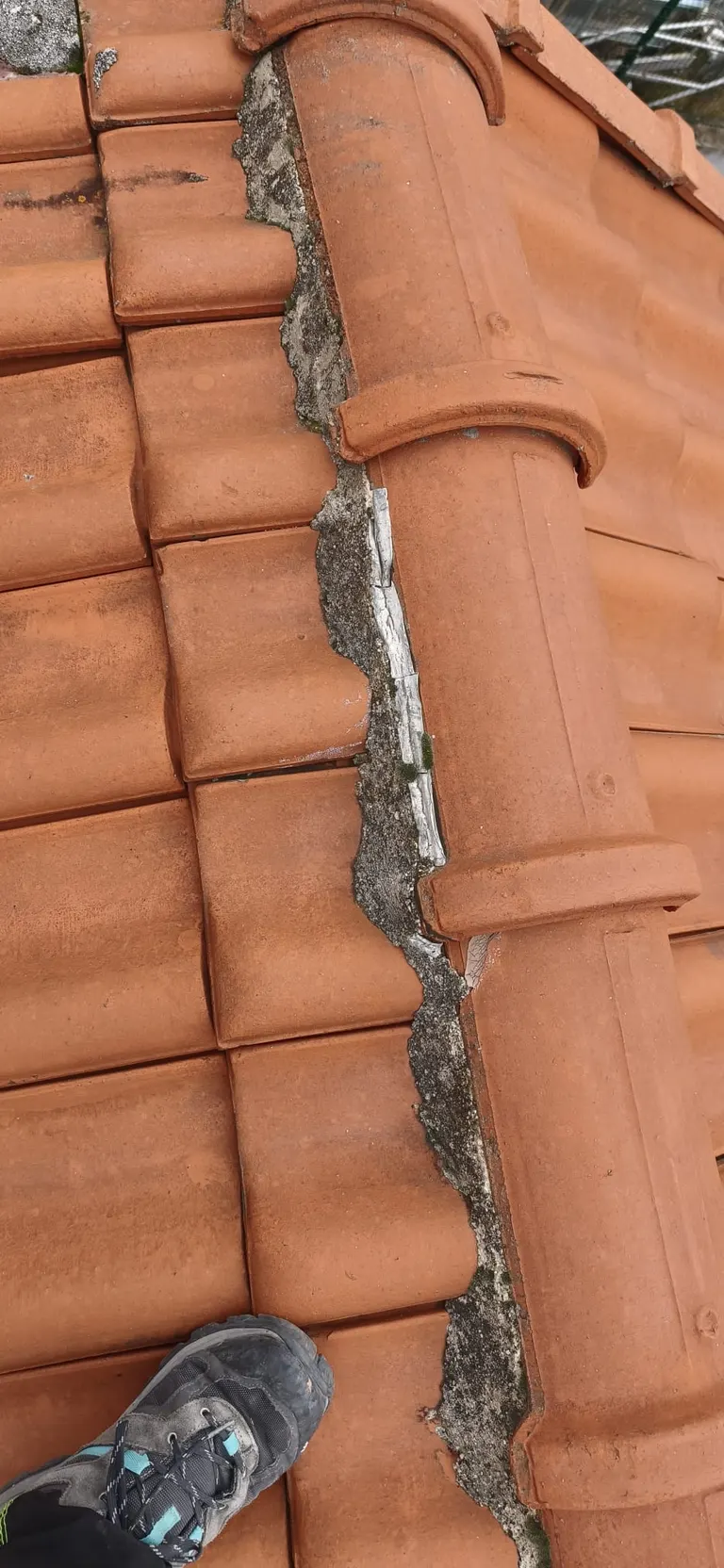
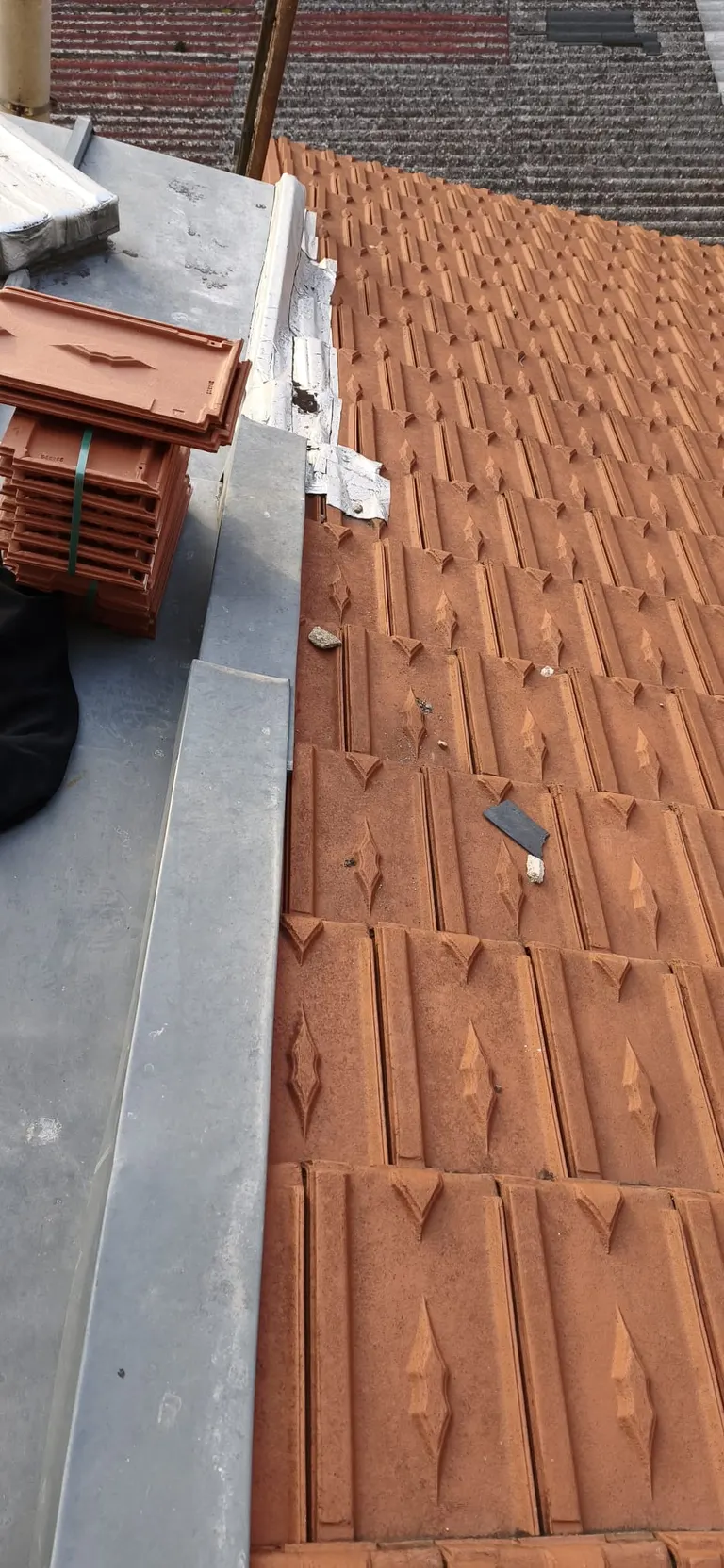
3. Flashings and joints: these connections between the roof and vertical elements (chimneys, party walls, dormer windows, vents) are the most vulnerable points of your covering. A flashing that peels away or a mortar joint that cracks creates a water entry almost invisible from the outside. Inspect them every year, ideally in spring, and have them repaired at the first signs of deterioration.
4. The framework: from the loft, inspect beams for signs of moisture (dark stains, soft wood), fungus (white or brown patches on the wood), or insects (small round holes of 1-3 mm in the wood = wood-eating insects). A weakened framework can compromise the entire covering. If in doubt, call a professional.
5. Ventilation: a roof must 'breathe'. If air does not circulate under the tiles, moisture accumulates and damages the insulation and framework from the inside. Check that ventilation grilles at the bottom and top of the roof are not blocked by moss, bird nests, or displaced insulation material.
Maintenance Mistakes to Avoid
Never clean your roof with a high-pressure washer (Kärcher type). The pressure (100-200 bar) strips the protective layer of tiles (the slip glaze) and makes them more porous than before cleaning. Moss returns faster, and tile lifespan is shortened. Tile manufacturers unanimously advise against this practice.
Do not walk on tiles without knowing how your roof tiles are laid. Some mechanical tiles can bear a person's weight if you walk on the bottom of the tile (where it rests on the batten). But barrel tiles, slates, and flat tiles are very fragile. If you must go on the roof, use a roofer's ladder (a roof ladder) that distributes weight.
Do not apply DIY 'anti-moss' products without checking compatibility with your type of covering. Some products contain acids that attack natural slate or certain renders. Professional products are formulated specifically for each substrate type and are far more effective and long-lasting.
Specific Maintenance by Covering Type
Mechanical tiles (Roman, barrel, flat): the most common type in Auvergne. Lifespan: 40-60 years. Recommended maintenance: gentle cleaning + waterproofing every 8-10 years, annual check of tiles and ridge. Key vulnerabilities: oldest tiles become porous and brittle — plan progressive replacement of the most damaged elements.
Natural slate: a noble and durable material (80-100 years). Slate does not require waterproofing treatment but its fixing hooks (copper or stainless steel) can corrode. Cleaning is done exclusively at low pressure with neutral products. Key vulnerabilities: slates that slip (failing hooks) and lead or zinc flashings at chimney bases.
Zinc and metal: 30-50 year lifespan for natural zinc, 50-80 years for pre-patinated zinc. Zinc naturally develops a protective patina (zinc carbonate) that shields it from corrosion. Never clean zinc with acid or alkaline products. Key vulnerabilities: soldered joints, seams, and connections with different materials (thermal expansion).
When to Call a Professional
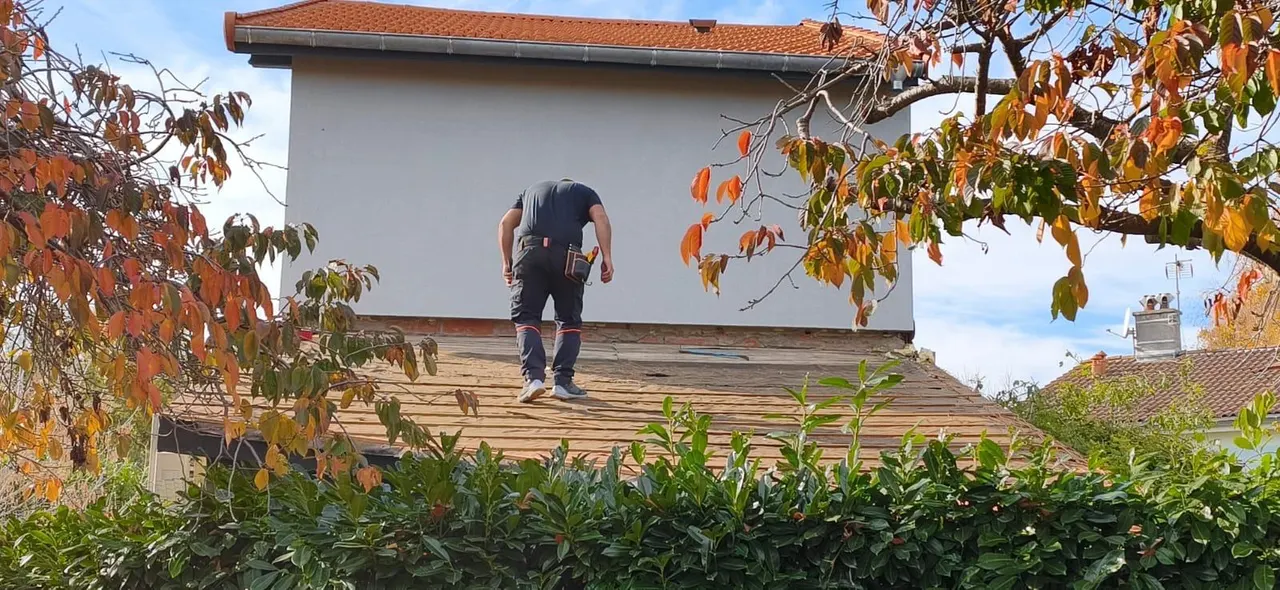
Certain operations absolutely require a qualified roofer: any work at height (above 3 metres), tile or slate replacement, flashing repair, waterproofing treatment, framework repair, gutter installation or replacement. Never take the risk of climbing onto the roof yourself — roof falls are the leading cause of fatal building accidents.
A professional also brings expert insight that a homeowner cannot have. Subtle signs — a slight distortion in the ridge line, abnormal tile colouring, localised sagging — can indicate structural problems invisible to an untrained eye. A free professional diagnosis, like the one we offer at Toit des Dômes, can save you thousands of euros by catching problems early.
For the Clermont‑Ferrand area, Toit des Dômes offers a complete and free roof diagnosis. Call 06 25 09 58 10 or fill in the contact form to schedule a visit within 24 to 48 hours.
Need a professional roofer?
Free, no-obligation estimate in Clermont-Ferrand and Puy-de-Dôme (63).