 TOIT DES
 Detecting and Repairing Roof Leaks
Practical guide to quickly identifying leaks and knowing the right solutions. Whether it's an emergency or prevention, the right actions to take.
Telltale Signs of a Leak
Roof leaks are not always obvious. The most common signs to watch for from inside: damp patches on the ceiling (often yellowish or brownish, irregular in shape), blistering or peeling paint, wallpaper coming away, a musty or damp smell in the loft, visible water drops during heavy rain. In advanced cases, black mould can appear in ceiling and wall corners.
Important: the water's entry point on the roof is not necessarily directly above the visible stain inside. Water can travel along the framework, slide along a vapour barrier, or follow an electric cable for several metres before finding an exit point. This is why an external diagnosis by a roofer is essential to pinpoint the leak's origin accurately.
There are also 'silent' leaks that do not show as visible stains but progressively damage insulation and framework. A clue: if your heating consumption increases unexpectedly, insulation soaked by an invisible leak could be the cause (wet insulation loses up to 90% of its thermal performance).
The Most Common Causes
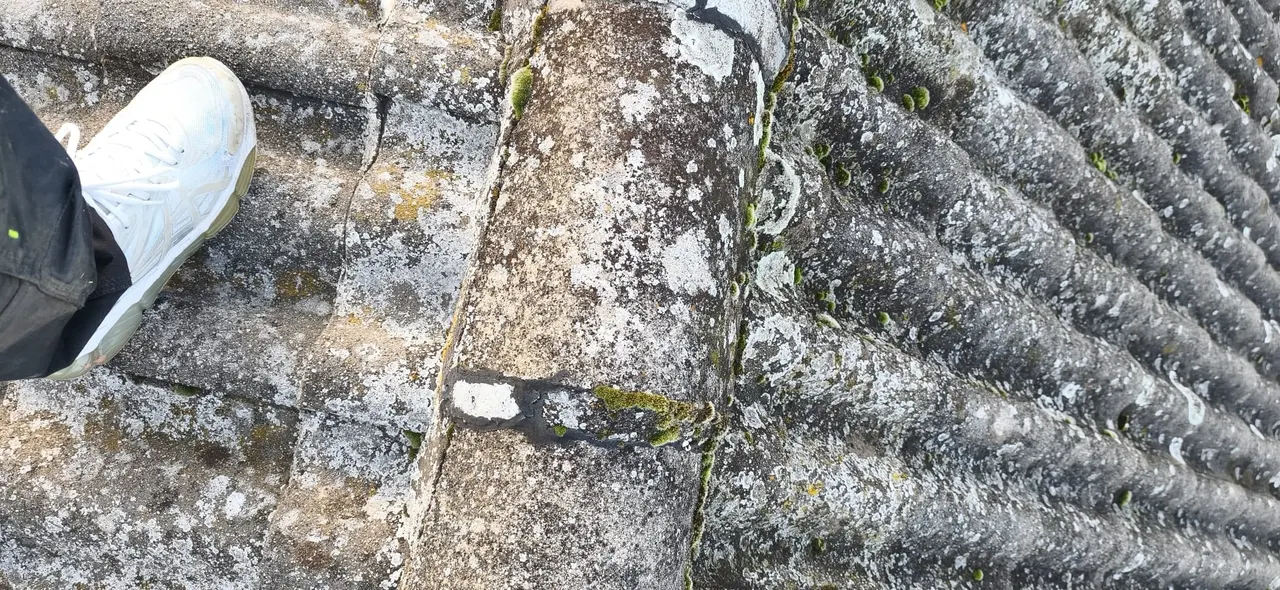
Broken or displaced tiles or slates: this is the most common cause, often after a storm or through natural ageing. A tile cracked by frost, a slate whose hook has rusted, a hip ridge displaced by wind — all are entry points for rainwater. In Auvergne, winter freeze-thaw cycles are destructive for untreated porous tiles.
Faulty flashings: the connections between the roof and vertical elements (chimney, party wall, dormer window, vent) are classic weak points. The flashing — whether zinc, lead, or mortar — peels away or cracks over time due to thermal movement and vibration. A faulty flashing lets water in along the wall or chimney, often invisibly from the outside.
Blocked or faulty gutters: gutters blocked by leaves or moss overflow during heavy rain. Water running down the façade can rise under tiles by capillary action, especially when wind pushes rain sideways. Gutters with holes or poor connections create parasitic water flows that degrade the façade and foundations.
Damaged underlay membrane: beneath the tiles there is often a waterproof membrane that catches water passing between tiles and channels it to the gutters. Over time, this membrane can tear or puncture. The leak then appears even though the tiles look fine from the outside.
Condensation: when the loft is poorly ventilated, indoor moisture (from cooking, bathrooms, breathing) rises and turns into water droplets under the roof — exactly like condensation on a window in winter. This can look like a leak, but the problem is poor ventilation, not the covering itself.
What to Do in an Emergency Leak
1. Protect your belongings immediately: place containers (buckets, basins) under drips and move valuables, furniture, and electronics away from the affected area. If water is running down a wall, move away from electrical sockets and cut the power to the room if necessary.
2. Do NOT climb onto the roof: in rain or wind, the risk of falling is very high, even for a professional. Wet tiles are slippery and the framework may be weakened by impacts. Wait for weather conditions to stabilise or, better still, call a roofer equipped with proper safety gear.
3. Tarp from the inside if possible: from the loft, a tarpaulin temporarily fixed under the infiltration point can channel water into a container and limit damage while awaiting professional intervention. Do not try to tarp the outside yourself.
4. Call an emergency roofer: at Toit des Dômes, we respond within 24 to 48 hours for emergencies across Clermont‑Ferrand and the conurbation. We install a professional external tarpaulin that makes your home weathertight while the permanent repair is organised.
5. Document and declare: take photos and videos of all damage (inside and outside) as soon as possible. If the leak is caused by a weather event (storm, hail), declare the claim to your insurer within 5 working days. Keep all invoices for emergency work — they will be reimbursed.
How to Pinpoint a Leak Accurately
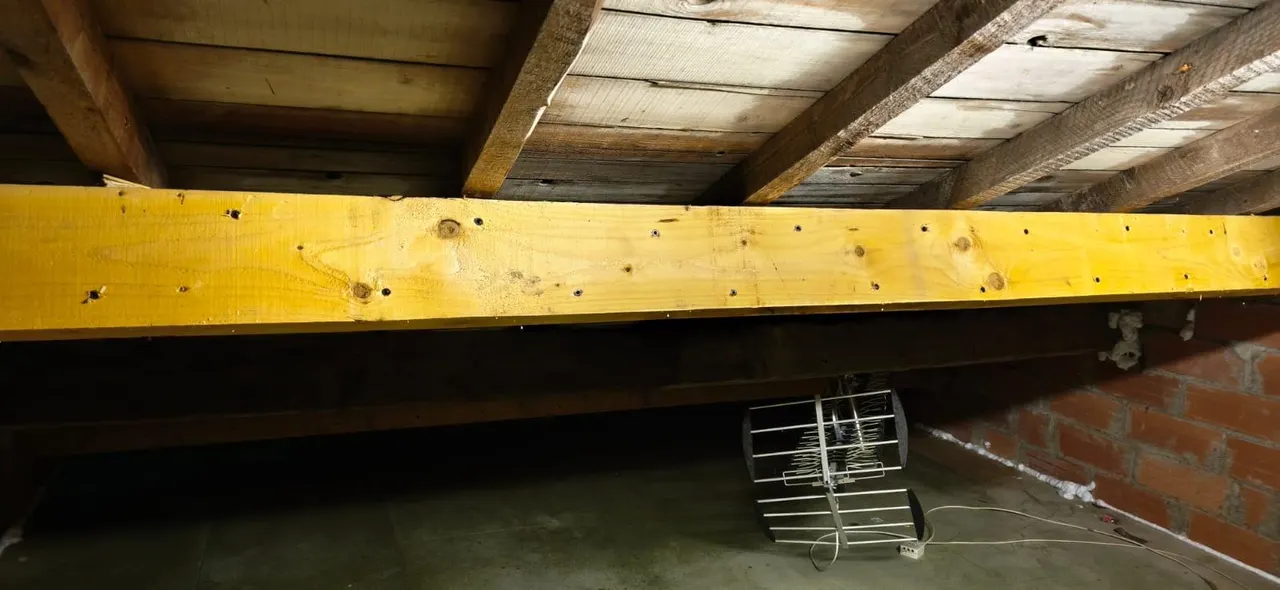
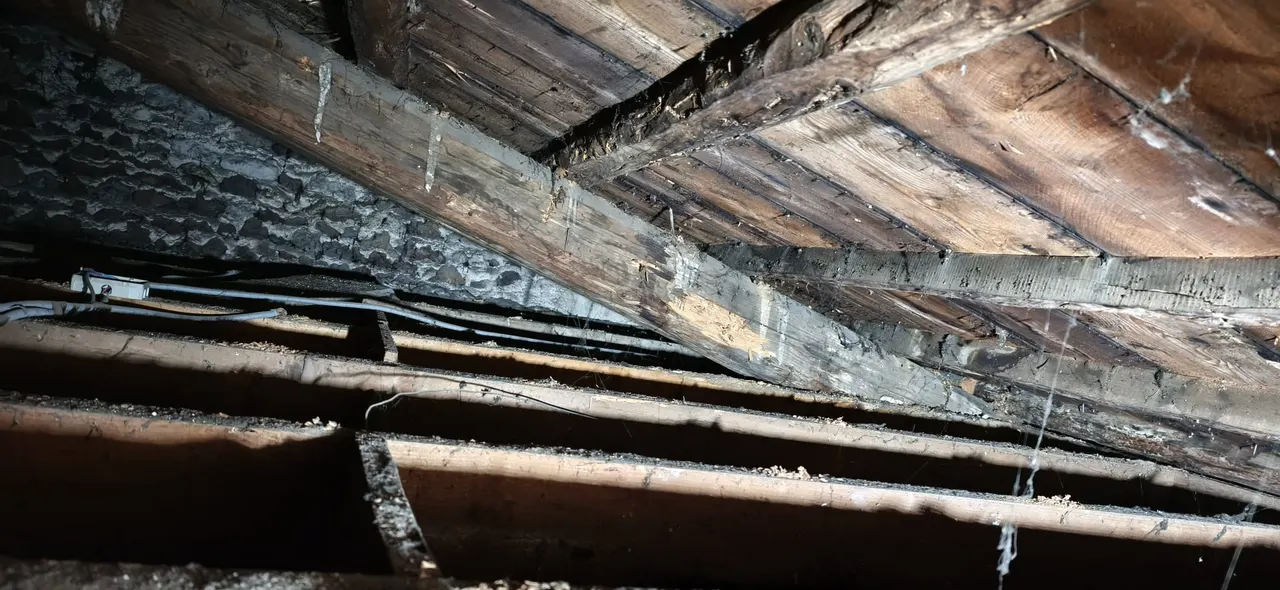
Leak detection is a methodical exercise requiring experience. The first step is to inspect the loft during rain with a powerful torch. Look for water trails on framework elements, dark stains on sarking boards or the underlay membrane, and active drips. Mark suspicious areas so you can find them easily again.
If the loft is not accessible, inspection is done from the outside. The roofer systematically examines the sensitive points: ridge, hip ridges, valleys (junction of two slopes), chimney and dormer flashings, connections with party walls, gutters and downpipes. A water test (controlled hosing of a suspect area) can confirm the leak's origin.
Modern technologies help with detection: a thermal camera reveals damp areas invisible to the naked eye (water retained in materials alters their thermal signature). Endoscopy allows inspection of inaccessible cavities. At Toit des Dômes, we use these tools when standard visual investigation is not enough.
Lasting Repairs vs Temporary Fixes
A temporary tarp or sealant patch can help in an emergency, but never replaces a lasting repair. Adhesive patches, waterproof mastics, and 'anti-leak' sprays sold in DIY stores have a limited lifespan (a few months to 1-2 years) and can mask a more serious problem that continues to degrade the structure underneath.
A professional lasting repair includes: precise identification of the cause (not just the symptom), replacement of defective elements (tiles, slates, flashings, gutters), checking and if necessary repairing the underlay and framework, and if needed a waterproofing treatment to prevent recurrence. All work is covered by the 10-year structural warranty.
The cost of a one-off repair (€150 to €800 depending on complexity) is nothing compared to the cost of a full roof replacement that an untreated leak eventually forces (€8,000 to €15,000 for a standard house). The sooner you act, the less it costs. Don't wait for the ceiling stain to grow — call at the first signs.
Preventing Leaks: The Actions That Save
The best leak is the one that never happens. A few actions reduce the risk considerably: clean your gutters twice a year (spring and autumn), have your roof inspected by a professional after every winter, schedule a cleaning and waterproofing every 8-10 years, and check that your loft ventilation is working properly.
If your roof is over 30 years old and has never had professional maintenance, we strongly recommend a full diagnosis. At Toit des Dômes, this diagnosis is free and without obligation. It gives you a clear picture of your covering's condition and the priority interventions needed to avoid future problems.

Need a professional roofer?
Free, no-obligation estimate in Clermont-Ferrand and Puy-de-Dôme (63).